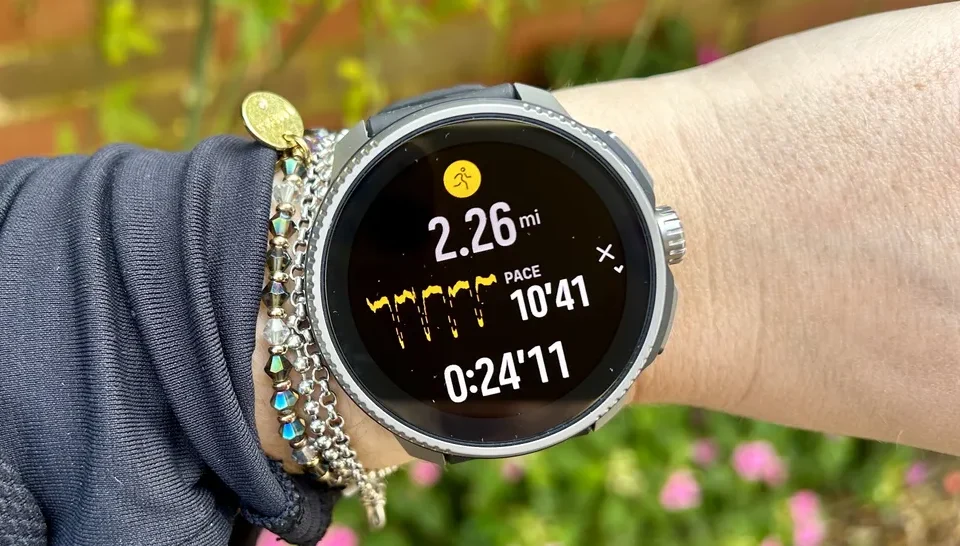

Triathletes do not buy a watch because it looks sharp in a box. They buy it because long training weeks expose every small flaw. The Suunto Race S has become a serious pick for American athletes who want a bright AMOLED screen, race-ready sport modes, offline mapping, and enough battery for hard training without paying top-tier flagship prices. That mix matters if you are juggling pool sessions, Saturday rides, brick runs, and recovery days around work and family. For readers tracking smart gear shifts through consumer technology updates, this is the kind of wearable that explains where the market is heading: smaller, sharper, and more training-focused. Suunto’s U.S. page lists free offline maps, 115+ sport modes, heart-rate and body metrics, AI coaching, AMOLED display, and up to 120 hours in its lowest-power GPS mode, which gives the Race S a feature set that lands well beyond a basic fitness tracker.
Why Triathletes Are Paying Attention Before Race Weekend
A good GPS triathlon watch earns trust before the start line. It has to feel natural in January base miles, not only during a summer race. That is where this smaller Race model gets interesting. It does not try to win by being the biggest watch on the table. It wins attention by being easier to wear, easier to read, and easier to live with between workouts.
The lighter case changes more than comfort
Wrist feel sounds boring until you sleep with a watch, swim with it, and wear it through an eight-hour workday after a morning run. Large watches can be fine for one workout. They get annoying when they turn into a daily object. Smaller wrists feel this first, but plenty of larger athletes notice it too.
A triathlon training watch has to collect recovery data while you are not training. That means sleep tracking, daily heart rate, HRV, and stress readings matter only if you keep the watch on. If the case digs into your wrist at night or catches under a wetsuit sleeve, you start taking it off. Data gaps follow.
The Race S case makes a practical bet: fewer people need a giant watch than brands used to think. A compact design can be a performance feature because it increases wear time. That sounds backward. It is not. The watch you keep wearing beats the watch with better specs sitting on the dresser.
The screen matters when your workout gets messy
AMOLED screens are not only about color. They help when your eyes are tired, your sunglasses are wet, or you are glancing down while holding a steady pace. Suunto says the display is built to stay sharp in fast situations and sunlight, and reviewers have also pointed to the bright screen as one of the Race line’s core strengths.
That matters during real training. Think about a Chicago lakefront run at dawn, a humid Houston ride, or a pool set where you are already late for work. You do not want to stare at your wrist for three seconds to check pace. You want the number, then your focus goes back to the session.
The non-obvious part is that screen quality can reduce mental load. A multisport GPS watch is already asking you to manage pace, route, zones, intervals, and recovery. If the display makes each glance cleaner, the watch gets out of your way. For many age-group athletes, that is the whole point.
What the Watch Gets Right Across Swim, Bike, and Run
Triathlon exposes weak design fast because one sport is never enough. A running watch can hide poor swim logic. A cycling watch can ignore open-water stress. A daily smartwatch can look athletic while failing the first brick workout. The Race S works because it treats multisport training as the baseline, not an add-on.
Open-water days reward simple data
Open-water swimming is messy by nature. Your arm dips below the surface, GPS signals break, and sighting already steals attention. A watch cannot remove that chaos, but it can avoid making it worse. Triathlete’s review notes that the Race line includes tri-friendly activities such as open water, pool swimming, cycling with power, running with built-in power, triathlon, and brick-style multisport training.
That mix fits the way American triathletes train. One week might include a YMCA pool session, a local sprint tri rehearsal, and a long ride on a farm road outside Des Moines. The watch needs to move between those settings without making every workout feel like a setup menu.
A GPS triathlon watch should not bury the basics. Distance, time, lap rhythm, heart rate context, and transition flow need to stay easy to reach. Too much screen clutter can hurt a swim or run more than missing a fancy metric. The best data is the data you can use while breathing hard.
Cycling and running screens need restraint
Cyclists love data until the ride gets tense. Then too much information turns into noise. Power, speed, heart rate, route, lap time, and climb data all have value, but not all at once. The Race S lets athletes shape sport screens around the session, which matters for race practice.
For example, a half-Ironman athlete in Arizona may want power and hydration reminders on the bike, then pace and heart-rate guardrails for the run. A sprint athlete in North Carolina may care more about staying smooth through transitions. Same watch, different job.
This is where beginner triathlon gear checklist content often misses the mark. New athletes do not need every metric. They need the few that stop bad decisions. Riding too hard early, running the first mile too fast, or ignoring recovery can ruin a good build. A restrained screen can protect you from your own excitement.
Why Suunto Race S Fits the Modern Triathlon Routine
The modern triathlete is not always chasing Kona. Many are parents, nurses, teachers, sales reps, software workers, military members, and weekend racers trying to make training fit around normal life. A watch built for that person has to handle serious sessions without acting like every Tuesday is an expedition.
Battery planning should match your race life
Battery anxiety is real, but it is also easy to misunderstand. Most triathletes do not need expedition-level runtime every week. They need enough power for daily wear, long weekend workouts, and race day without charging becoming another chore. Suunto lists up to 30 hours in its best multi-band GPS mode, up to 40 hours in single-band, and up to 120 hours in power-saving GPS modes. Daily smartwatch use is listed at up to 9 days, with standby mode reaching up to 13 days.
That range fits most race calendars. A sprint, Olympic, half-distance, or long training brick does not need the same battery profile as a multi-day trail event. The trick is matching the mode to the session. Use the stronger GPS setting when pace and route matter. Save the extended mode for long outings where basic track recording matters more than fine detail.
Here is the counterintuitive bit: huge battery numbers can distract buyers. A triathlon training watch with sensible battery modes may serve better than a giant watch you dislike wearing. Charging once or twice a week is not a crisis if the watch is lighter, readable, and steady during the workouts that count.
Offline maps matter beyond trail runs
Offline maps sound like a trail-runner feature, but they have a place in triathlon too. Travel races often send athletes into unfamiliar towns. Training camps do the same. Even a local long ride can drift into roads you do not know, especially when a closed bridge or bad shoulder forces a change.
Suunto lists offline maps, route navigation, breadcrumb trail, POI navigation, route planning with altitude profile, and multiple satellite systems with L1 and L5 GNSS support. iRunFar also notes that maps can be downloaded through the app and synced to the watch for offline use, with topographic details and trails available after download.
That can help during a Wisconsin race weekend when your shakeout run leaves the hotel grid, or during a Colorado training block where a bike detour changes the plan. You may never need full navigation in a race. You may need it on the day before, when stress is high and your phone battery is low.
Where It Beats Expectations and Where It Still Asks for Compromise
No watch wins every category. That is good. A watch that claims to please everyone often ends up expensive, bulky, and packed with features many athletes never touch. The Race S makes a clearer deal. It gives strong endurance tools at a friendlier size and price, while leaving some smartwatch extras behind.
The value story is stronger than the spec sheet
At the time of checking, Suunto’s U.S. store showed the All Black model discounted from $349 to $278.99. Prices can change, so buyers should confirm before purchasing, but that current positioning puts it in a tense spot for rivals: below many premium endurance watches, yet above basic trackers.
Triathlete’s review made a similar point, saying the price stood out because few AMOLED watches near that range offered the same mix of triathlon functions, offline mapping, and screen quality. That is why the Race S keeps getting attention from athletes who want a serious tool without drifting into luxury-watch territory.
The spec sheet is not the whole story, though. Value also means fewer regrets six months later. A cheaper watch that cannot handle open water or multisport transitions becomes expensive when you replace it. A premium watch with features you never use can feel wasteful. This model sits in the middle with purpose.
Smartwatch gaps may bother some buyers
The compromise is easy to name: this is more training tool than lifestyle gadget. Triathlete noted that the Race models can control smartphone music but do not have onboard music storage. For some runners, that is a hard pass. If you want to leave your phone at home and stream or store playlists from the wrist, you may prefer another device.
Payments, app depth, and watch-face variety may also matter if you want a full smartwatch. The Race S can handle notifications and media controls, according to Suunto’s listed connectivity features, but it is not trying to become a tiny phone.
That limitation is not a flaw for every buyer. Some athletes want fewer distractions during training. A watch that does less outside sport may be better inside sport. Before you compare it against every shiny wearable, compare it against your actual week. If your week is swim, bike, run, lift, sleep, repeat, the trade may feel fair.
Conclusion
The Race S stands out because it understands the quiet reality of triathlon training. Most athletes are not asking for the largest case, the loudest feature list, or a wrist computer that does everything. They want a GPS triathlon watch that tracks the work, survives long weekends, stays readable, and does not become a burden on the wrist. That is why the Suunto Race S has found a strong lane among U.S. triathletes who care more about training flow than gadget bragging rights. It is not perfect, and music-first smartwatch buyers should look closely before choosing it. But for athletes who want offline maps, multisport modes, strong battery settings, and a lighter daily fit, the value feels hard to ignore. Pair it with smart planning, not blind hype. Start by deciding which metrics change your decisions, then choose the watch that keeps those numbers close when your legs get loud.
Frequently Asked Questions
Is the Race S a good watch for first-time triathletes?
Yes, especially for beginners who want room to grow. It covers swim, bike, run, multisport sessions, recovery tracking, and navigation without forcing a premium price. New athletes should still learn the basic screens before race day so transitions feel calm.
How long does the battery last during GPS workouts?
Suunto lists up to 30 hours in its best multi-band GPS mode and longer runtime in lower-power modes. That is enough for most sprint, Olympic, half-distance, and many full-distance athletes, depending on settings, race time, and battery habits.
Does it work for open-water swimming?
Yes, the Race line includes open-water and pool swim activity options, which makes it useful for triathlon prep. Open-water GPS can still vary because wrists dip below the surface, so review your route after the swim with that in mind.
Is this better than a basic running watch for triathlon?
For triathlon, yes in most cases. A basic running watch may track runs well but miss multisport transitions, cycling power needs, swim modes, or race-day screen setups. A multisport GPS watch makes training cleaner across all three sports.
Can it replace a bike computer?
It can handle many bike sessions, especially if you mainly need time, heart rate, route, and power data. A dedicated bike computer is still better for large maps and constant handlebar viewing, especially on long rides or technical routes.
Does the watch have offline maps?
Yes, offline maps are part of the feature set, though you need to download map areas through the app first. This helps for travel races, unfamiliar routes, long rides, and training blocks where phone signal may drop.
Who should avoid buying it?
Skip it if onboard music, tap-to-pay, or deep smartwatch apps matter more than training tools. It is built more for endurance work than lifestyle convenience. Athletes who want a full smartwatch experience may feel limited.
What is the best reason to choose it?
The strongest reason is balance. It gives triathletes a bright display, serious sport modes, offline navigation, recovery tools, and strong GPS battery options in a smaller body. That blend makes it a smart pick for training-heavy weeks.