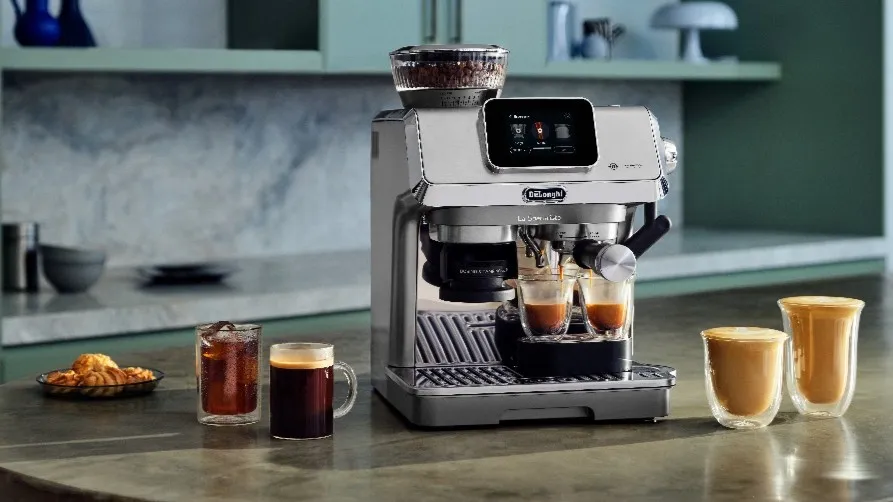

A cafe counter punishes weak equipment fast. That is why La Specialista Maestro is getting attention from American cafe owners who want bar-style control without turning every drink into a training session. It is not a full commercial machine, and that matters. The appeal sits in a narrower, smarter lane: small shops, bakery counters, tasting rooms, office cafes, and owners testing espresso service before buying a two-group setup. For readers who follow small business product coverage, this machine is interesting because it blends grinder, tamping help, hot milk drinks, and cold options into one counter unit. DeLonghi lists a 19-bar pump, 15 grinder settings, five temperature settings, eight preset recipes, an 84.54-ounce water tank, and cold brew in under five minutes, which explains why owners with tight space are paying attention. The real question is not whether it replaces a workhorse cafe machine. It does not. The better question is whether it can make a small coffee program feel controlled, clean, and repeatable enough to earn its place. For many owners, that answer depends less on prestige and more on morning rhythm.
Why La Specialista Maestro Makes Sense for Small Coffee Spaces
A cafe owner does not always need more machine. Sometimes they need less chaos. That is where this DeLonghi model starts to make sense, especially in places where coffee supports the main business instead of being the whole business. A bookstore in Portland, a salon in Austin, or a bakery in New Jersey may sell cappuccinos because guests ask for them, not because the owner wants to build a full barista team. The machine’s value sits in that awkward business corner where customers expect better coffee, but the owner still has payroll, rent, pastries, retail shelves, and front-door traffic to manage.
The middle ground between hobby gear and cafe equipment
Most espresso choices split too sharply. On one side, you have home gear that asks for patience, scales, dosing cups, and a calm morning. On the other, you have commercial equipment that expects plumbing, grinder dialing, trained staff, and enough drink volume to pay for the setup. A small cafe owner often lives between those worlds. The counter may be real, the customers may be paying, but the coffee program may still be young.
That middle ground is awkward. A $500 machine can look cheap on opening day and cost more in missed drinks later. A $10,000 setup can be a heavy bet before customers prove they will buy enough lattes. This is why a semi-guided machine with built-in grinding, assisted tamping, preset drinks, and automatic milk frothing has a real role. It lowers the number of things that can go wrong before the first customer has paid. It also gives the owner one support line, one manual, and one cleaning routine instead of several disconnected pieces of gear.
The non-obvious part is that cafe owners do not always chase the most “professional” workflow. They chase the workflow their least experienced staff member can repeat on a busy Saturday. That may sound less romantic than a classic barista station, but it is closer to how small food businesses survive. A drink that is 85 percent as refined but made right ten times in a row can beat a better shot that only one person on the team knows how to pull.
When space costs more than equipment
Counter space can be the hidden rent inside a cafe. A 28-inch espresso zone might force a pastry case to shrink, push a pickup shelf into a bad spot, or make the cashier reach over a grinder all day. One machine that handles grinding, brewing, and milk can protect space that earns money in other ways. In a 600-square-foot shop, the machine is not only an appliance. It is part of the floor plan.
DeLonghi’s U.S. listing puts the machine at 14 by 16.5 by 18.5 inches with a product weight a little above 35 pounds. That is not tiny, but it is compact compared with a separate grinder, espresso machine, knock box, pitcher zone, and training tools spread across the counter. For a wine shop offering affogatos on weekends, that smaller footprint can be the difference between “we can try this” and “we need a remodel.” It can also keep the guest-facing counter from looking like a repair bench.
Space also changes staff behavior. When everything has a clear home, people clean faster and spill less. That has a direct effect on the cafe espresso workflow, because customers judge speed and calm before they judge flavor notes. A machine that keeps the mess contained can help a small team look more prepared than it is. In service, looking calm is not vanity. It protects trust.
Cafe Espresso Workflow Is Where the Real Value Shows
Specs sell the machine, but workflow earns the repeat customer. Espresso is not one act. It is a chain of small acts: grind, dose, tamp, lock in, brew, steam, pour, wipe, reset. When one link breaks, the whole counter feels stressed. That is why owners are drawn to tools that remove guesswork from the repeated parts while leaving enough control for taste. The best small-shop coffee station is not the one with the most knobs. It is the one that keeps moving when the phone rings, the pastry case empties, and someone asks whether oat milk costs extra.
Assisted tamping reduces one common failure point
Tamping is easy to explain and hard to repeat under pressure. New staff may tamp crooked, press too lightly, press too hard, or leave grounds across the counter. The drink may still look fine from the customer side, but the owner sees the waste. Sour shots, muddy pucks, and slow service all start adding up. Even a minor tamping habit can turn into a daily leak of beans, time, and patience.
The assisted tamping lever is not a magic fix. It will not save stale beans or a bad grind choice. What it can do is remove one variable from a small team’s routine. For an owner training a cashier to make a latte during weekday mornings, that matters more than coffee forums admit. It also keeps the station cleaner, which matters when the same employee may be handling wrapped pastries, register work, and drink pickup.
A strong cafe espresso workflow is built around fewer judgment calls, not fewer standards. The DeLonghi machine still asks you to choose beans, adjust grind, select strength, and manage milk style. But it turns tamping from a hand-skill test into a repeatable step. That makes the station easier to teach and easier to check. The owner can watch the process from three feet away and spot a skipped step before the cup leaves the counter.
Where automatic milk frothing saves labor
Milk drinks carry a lot of the revenue in American coffee service. They also expose weak training fast. A dry cappuccino, flat latte, screaming steam wand, or scorched oat milk can make a customer doubt the whole place, even when the espresso underneath is decent. Customers may not know the terms, but they know when a drink feels thin, harsh, or careless.
This is where automatic milk frothing becomes more than a comfort feature. DeLonghi says the machine offers both automatic frothing through its LatteCrema Hot system and a traditional steam wand for hands-on work. That dual path gives an owner a useful choice: let newer staff lean on the guided system, while stronger staff use the wand when the shop is slower or the drink needs a more personal touch. It also helps during rushes, when one consistent milk routine is better than four staff members improvising.
The surprise is that automation does not always cheapen the experience. Used well, it protects consistency. A customer buying a latte at 7:40 a.m. usually wants the same drink they liked last Tuesday. They are not grading the wrist angle on the pitcher. They want comfort in a cup, and they want it before work starts. For a small owner, repeat comfort can be more profitable than occasional brilliance.
What Cafe Owners Should Know Before Putting It Behind the Counter
The danger with a stylish espresso machine is easy to see. People mistake polish for capacity. This DeLonghi model can do a lot, but it still belongs in the right setting. A high-volume downtown cafe pulling back-to-back drinks for three hours needs commercial equipment, a dedicated grinder, service support, and a bar layout built for speed. A hybrid lifestyle business has different needs. The mistake is not buying a smaller machine. The mistake is asking it to solve a problem it was never built to solve.
It is better as a controlled program than a full bar
A small owner should ask one blunt question before buying: how many espresso drinks must this station make in the busiest hour? If the answer is ten to twenty drinks around a bakery rush, the machine may fit. If the answer is sixty drinks with a line out the door, it is the wrong tool. That question should come before the color, the price, and the excitement of adding lattes to the menu.
That does not make it weak. It makes the category clearer. This is a smart pick for a soft-launch coffee menu, VIP waiting room, small inn breakfast area, boutique retail counter, church cafe, or coworking lounge. It lets you offer espresso service without building your entire floor plan around coffee. It can also help an owner see which drinks deserve menu space before buying commercial equipment.
A home barista setup often aims for personal control. A small business setup aims for controlled repetition. Those sound close, but they are not the same. At home, you may enjoy spending ten minutes dialing in a new Ethiopian roast. At a cafe counter, that same ten minutes can turn into five impatient customers and a cold pastry order. The customer sees delay before they taste intention.
The grinder and presets need a house recipe
Built-in grinders can be convenient, but they do not remove the need for a house standard. DeLonghi lists 15 grinder settings and four dose options, which gives an owner enough room to adapt, but not enough reason to freestyle every cup. The smartest move is to choose one espresso bean, one milk, one non-dairy milk, and a short written recipe for the team. Make the first month boring on purpose. Boring is how you find the baseline.
The Specialty Coffee Association espresso research reports that many baristas work near a 1:2 brew ratio, often measuring yield by weight, with common extraction times around 25 to 30 seconds. A small shop does not need to turn every employee into a competition barista, but it should still give them numbers they can repeat. Numbers are not there to make coffee cold and technical. They keep the drink from drifting when the owner is not standing there.
Here is the practical version: write the grind setting on tape inside a cabinet, keep one small scale nearby, and taste the first shot each morning. That sounds fussy until the milk changes, the beans age, or the weather shifts. Then it becomes the cheapest quality control you own. A five-minute check can save a day of flat drinks.
How It Competes With Bigger Machines in Real American Shops
The reason cafe owners notice this machine is not raw power. It is the way it changes the buying decision. Instead of asking, “Can we afford a full espresso bar?” the owner can ask, “Can we prove customers want one?” That shift is powerful because it turns coffee service from a gamble into a test. American small businesses often grow through careful experiments, not grand redesigns. A machine like this fits that habit.
It lowers the cost of learning
Opening a coffee program usually teaches expensive lessons. Owners discover which drinks sell, which milk runs out first, which staff member hates steaming, which customers ask for iced options in February, and which menu names confuse people. A smaller machine lets those lessons arrive before the owner has bought every permanent fixture. The first month becomes research you can serve in a cup.
The cold side matters here. DeLonghi says the machine includes cold brew and espresso cool presets, with cold brew made in under five minutes through its Cold Extraction Technology. For U.S. shops, that feature is not a gimmick. Iced drinks have become a year-round habit for many customers, especially younger buyers who order cold coffee in every season. A warm bakery in Phoenix and a design studio in Chicago may both see cold drinks move before noon.
A bigger machine may pull faster shots, but it will not tell you whether your customers care about flat whites, iced espresso, or flavored lattes. Testing the menu first can save an owner from building the wrong bar. That is a quiet advantage, and it is easy to miss when everyone is staring at pressure numbers. Learning before scaling is still a business skill.
It gives owners a bridge to better training
The home barista setup mindset can help staff learn without fear. A guided screen, marked controls, and repeatable milk options make espresso less intimidating for someone who has never worked behind a cafe counter. That matters because small businesses often train from within. The person making a cappuccino at 9 a.m. may also be the person boxing muffins at 9:20. A forgiving station gives that person room to improve without turning each order into a test.
Training still matters. Owners should teach basic taste checks: sour means under-extracted, bitter may point toward over-extraction, thin milk needs better texture, and a dirty steam wand is never acceptable. A machine can guide steps, but it cannot build pride. That part still comes from the owner. The best training culture is plain: taste it, clean it, fix it, repeat it.
For content teams writing about coffee equipment, this is also where internal education helps. A page about choosing espresso gear for small shops can connect well with a practical home coffee station planning guide, because many buyers are moving from home practice into small public service. The bridge is the story. People do not buy espresso machines only for drinks. They buy a more confident version of the service they want to offer.
Conclusion
The smartest way to view this DeLonghi machine is as a serious bridge, not a commercial replacement. It gives small operators a cleaner path into espresso service, especially when space, labor, training, and menu testing matter more than peak-hour volume. A full cafe should still buy gear built for full cafe stress. But a bakery, boutique, inn, tasting room, or office cafe may need a lower-risk starting point that still respects the drink. That is where La Specialista Maestro earns its growing attention. It can help owners learn what their customers order, how their staff handles service, and whether coffee should become a bigger part of the business. Buy it for the right counter, build a simple recipe around it, and treat it like a test with standards. The machine can do plenty, but the owner’s discipline decides whether it becomes a smart investment or another shiny appliance. Start small, measure the response, and let real orders tell you what to build next.
Frequently Asked Questions
Is this DeLonghi espresso machine good for a small cafe?
It can work well for low-to-moderate drink volume, especially in bakeries, boutiques, salons, tasting rooms, and office cafes. It is not meant to replace a plumbed commercial espresso machine in a busy coffee shop with long morning lines.
Can cafe owners use it for milk drinks all day?
They can use it for steady milk drink service, but volume matters. The automatic milk system helps with repeatability, while the steam wand gives more control. For nonstop latte production, a commercial machine is still the safer choice.
What type of business benefits most from this machine?
The strongest fit is a business where coffee supports another offer. Think pastry counters, retail shops, small hotels, coworking lounges, and private offices. Those spaces need quality and speed, but not the full expense of a cafe buildout.
Does the built-in grinder remove the need for dialing in espresso?
No. It reduces the number of separate tools, but it does not remove recipe work. Owners still need to choose fresh beans, set the grind, taste shots, track timing, and adjust when beans age or the room changes.
Is automatic milk frothing better than a steam wand?
It is better for consistency and easier training. A steam wand is better for hands-on texture control when staff have skill and time. The strongest setup is having both, because different employees and service moments need different paths.
Can it make iced coffee drinks for American customers?
Yes, it includes cold drink presets, which matters because iced coffee demand is not limited to summer anymore. For many U.S. customers, cold espresso drinks are a normal weekday order, even when hot drinks are also available.
How should owners train staff on this machine?
Start with one house espresso recipe, one milk routine, and one cleaning checklist. Keep the process visible near the station. Staff should taste the first shot of the day and learn basic flavor signs like sour, bitter, thin, and balanced.
Is it worth buying before investing in a commercial espresso bar?
It can be worth it as a test machine. Owners can learn demand, menu fit, staff comfort, and customer habits before committing to a larger buildout. That learning can prevent an expensive setup from being bought too soon.