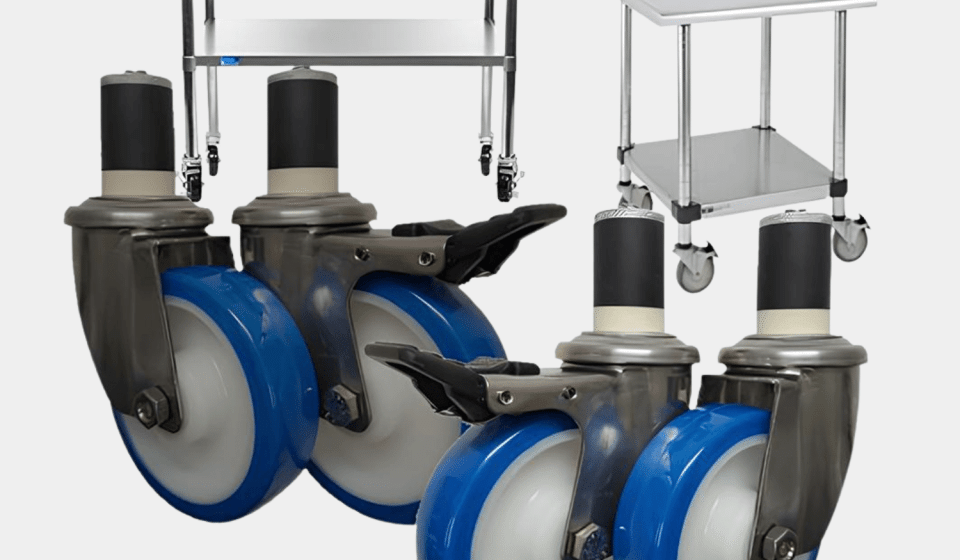
Stainless Steel Castor Wheels for Food Processing, Bakeries, and Cold Storage Facilities

Food manufacturing plants, commercial bakeries, dairy processors, abattoirs, beverage bottlers, and cold-storage warehouses across Kenya—from Industrial Area and Ruiru to Thika, Naivasha, and Mombasa—operate under some of the toughest environmental conditions in industry. Unlike dry general warehouses, food and cold-chain facilities expose equipment daily to high-pressure hot water washdowns, caustic sanitizing detergents, animal fats, brine, fruit acids, extreme oven heat, and sub-zero blast freezers.
Fitting standard zinc-plated mild steel castors onto stainless-steel preparation tables, dough racks, or meat trolleys leads to rapid rusting, seized swivel bearings, flaking metal contamination, and failed KEBS or HACCP food-safety audits. Upgrading to 304 or 316 stainless steel castor wheels paired with food-grade polymer treads protects product hygiene, keeps trolleys rolling smoothly in wet and freezing environments, and dramatically cuts replacement costs.
Why Standard Zinc-Plated Castors Fail in Food & Cold Environments
Standard industrial castors rely on a thin electro-galvanized zinc coating over mild steel. While fine for dry warehouses, that zinc layer breaks down rapidly in food and cold-storage plants:
- Chemical & Washdown Corrosion: Daily cleaning with chlorinated sanitizers, sodium hydroxide (caustic soda), and acidic descalers strips zinc plating within weeks, leaving bare steel to rust and shed iron oxide flakes onto clean floors or food prep zones.
- Condensation Rust in Cold Rooms: Moving trolleys repeatedly between warm loading bays (+25°C) and chillers or blast freezers (-25°C) causes constant condensation inside swivel raceways and axle bearings, freezing standard grease solid and rusting steel balls.
- Audit & Hygiene Non-Compliance: Food safety standards (HACCP, ISO 22000, and KEBS hygiene inspections) strictly prohibit corroded, flaking, or grease-leaking hardware anywhere near food handling lines.
Grade 304 vs. Grade 316 Stainless Steel Castors: Which Do You Need?
Not all stainless steel offers the same chemical resistance. Choosing between Grade 304 and Grade 316 depends on the specific substances used in your plant:
- Grade 304 Stainless Steel (The Food Industry Standard): Contains 18% chromium and 8% nickel. Ideal for commercial bakeries, dairy processing, vegetable packhouses, pharmaceutical cleanrooms, and standard cold storage where fresh water, mild detergents, and organic food acids are present.
- Grade 316 Stainless Steel (Marine & High-Chloride Grade): Adds 2%–3% molybdenum for superior resistance against pitting corrosion. Essential for meat and fish processing plants (heavy salt/brine exposure), pickling or vinegar bottling lines, CIP (Clean-In-Place) aggressive chemical washdowns, and facilities located along Kenya’s humid coastal belt in Mombasa, Kilifi, and Malindi.
(Tip: Ensure that every metallic component—not just the outer fork, but also the swivel raceway balls, kingpin, axle bolt, nut, and brake pedal—is genuine stainless steel, as mixed carbon-steel bearings inside a stainless fork will still rust and seize.)
Matching Wheel Treads & Bearings to Extreme Temperatures
In food and cold-chain operations, the wheel tread and internal bearing lubrication must handle wide temperature swings without cracking, melting, or locking up.
1. Cold Storage & Blast Freezers (-30°C to +4°C)
- Recommended Tread: White Virgin Nylon (Polyamide) or specialized low-temperature Polyurethane. Standard rubber becomes rock-hard and brittle below -10°C, cracking under heavy pallet loads, whereas virgin nylon stays tough and rolls effortlessly on icy concrete or epoxy.
- Low-Temperature Grease: Specify bearings and swivel raceways packed with food-grade synthetic low-temperature grease (rated down to -40°C) so wheels do not freeze stiff inside blast chillers.
2. Commercial Bakeries & High-Heat Ovens (Up to +280°C)
- Recommended Tread: High-Temperature Phenolic Resin or Glass-Filled High-Temp Nylon wheels. Standard polyurethane or rubber softens, bubbles, or melts inside rotary rack ovens. High-temp bakery castors tolerate continuous oven cycles up to 250°C–280°C without flat-spotting or emitting toxic fumes.
- Lubrication: High-temperature copper-free food-grade grease or plain-bore / sintered bronze bushings that never drip melted grease onto bakery floors.
3. Wet Washdown & Slaughterhouse Floors
- Recommended Tread: Virgin Nylon or Polypropylene with plain bore or sealed stainless-steel ball bearings and full thread guards. Plain-bore nylon wheels have no hidden needle rollers where water or blood proteins can trap bacteria—making high-pressure steam sanitation fast and thorough.
Quick Selection Matrix for Food & Cold-Chain Facilities
| Application Area | Operating Temp | Recommended Fork | Recommended Wheel Tread | Bearing & Grease Spec |
| Bakery Oven Racks | +150°C to +280°C | 304 Stainless Steel | High-Temp Phenolic or Glass-Filled Nylon | Plain bore / High-temp food-grade grease |
| Cold Rooms & Blast Freezers | -30°C to +4°C | 304 Stainless Steel | Virgin White Nylon or Cold-Grade PU | Sealed SS bearings + Low-temp (-40°C) grease |
| Meat, Fish & Brine Processing | 0°C to +35°C | 316 Stainless Steel | Virgin Nylon or Polypropylene | Plain bore or sealed SS bearings (washdown) |
| Dairy, Beverage & Packhouses | +4°C to +40°C | 304 Stainless Steel | Food-Grade Polyurethane or Nylon | Sealed SS ball bearings + NSF H1 food grease |
| Commercial Kitchen Prep Tables | +10°C to +50°C | 304 Stainless Steel | Non-marking Grey TPR or PU (with brakes) | Sealed precision bearings + thread guards |
4 Best Practices for Hygienic Castor Maintenance
- Insist on NSF H1 Food-Grade Lubricants: Whenever regreasing swivel raceways or wheel hubs in food plants, use only certified NSF H1 food-grade grease so incidental contact never compromises product safety.
- Inspect Seals and Thread Guards Monthly: High-pressure washdown lances aimed directly at axle seals at close range can force water past rubber lips—train cleaning crews to spray at an angle and replenish grease periodically.
- Fit Total-Lock Stainless Brakes on Prep Tables: Stainless-steel prep tables, meat slicers, and mixing bowls require all-stainless total-lock brakes so equipment stays firmly anchored during heavy chopping or mixing.
- Never Mix Mild Steel Fasteners: When bolting stainless castors onto equipment plates, use 304 or 316 stainless-steel bolts, washers, and nyloc nuts to prevent galvanic rust stains around mounting holes.
Upgrade to Food-Safe, Rust-Proof Mobility Today
Whether you operate a commercial bakery, dairy plant, meat processing facility, or cold-storage warehouse, we stock 304 and 316 stainless steel castors, high-temp oven wheels, and cold-room nylon wheels across Kenya. Contact our industrial specialists today for technical specs and bulk quotations.