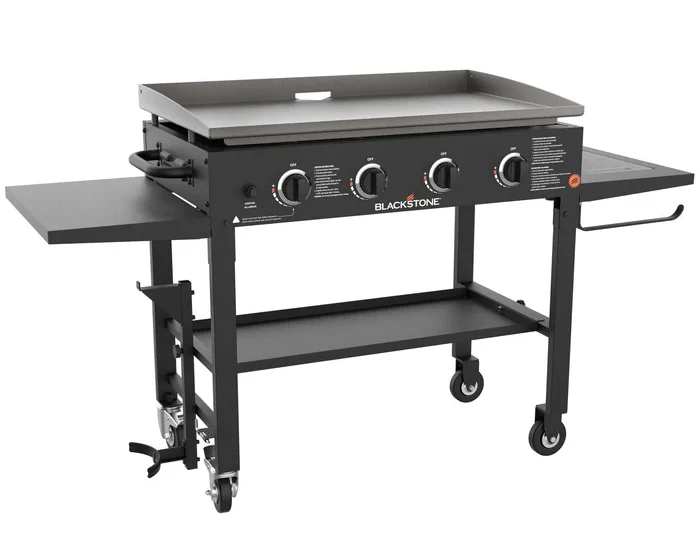

Backyard cooks know the bad feeling: the cart is ready, the weekend is close, and the model you wanted is gone. That is why the Blackstone 36 Inch Griddle is getting fresh attention from American shoppers who want more cooking space before the next family cookout, tailgate, or long Saturday on the patio. The appeal is not hard to read. A wide flat top can handle pancakes at breakfast, smash burgers at lunch, and steak fajitas by sunset without making you move back and forth between the kitchen and the yard. For readers who track retail movement through consumer product coverage, this restock story lands at the point where summer habits meet real stock pressure. The smartest buyers are not asking whether a big griddle looks fun. They are asking which model, bundle, cover, and fuel setup make sense before another sellout wave hits their ZIP code.
Why the Blackstone 36 Inch Griddle Restock Feels Different This Summer
A big restock only matters when the product solves a real pain. This one does. Many backyard grills are built around heat from below and space above the grates, which is fine for steaks, ribs, and chicken pieces. A wide griddle changes the job. It gives you one open cooking field where eggs, onions, tortillas, bacon, shrimp, and burgers can all move around without falling through metal bars. Blackstone’s current official griddle collection lists several 36-inch options, including a base unit, hard-cover version, hood version, hood bundle, and an air-fryer combo, with prices shown across that lineup.
Why a four burner griddle fits real family cooking
A four burner griddle is not only about size. The better reason to want four heat zones is control. On a packed summer evening, one corner can hold onions, one can toast buns, one can sear patties, and one can sit lower for finished food. That sounds small until you cook for eight people who all want a different burger.
The common 36-inch Walmart listing describes four independent cooking zones and a 768-square-inch surface, which explains why buyers treat this as a patio workhorse rather than a weekend toy. That surface area means you can stop cooking in waves. Pancakes do not need to come out four at a time while half the table waits. Chicken fried rice does not need three pans and a crowded stovetop.
Here is the counterintuitive part: bigger can make cooking calmer. A small griddle forces you to rush because food has nowhere to rest. A wider top lets you create a hot lane, a warm lane, and a holding lane. You cook with less panic, even when the backyard is noisy.
What a 36 inch flat top grill changes on a busy patio
A 36 inch flat top grill earns its space when the meal has parts. Think about a Sunday in Texas or Ohio where burgers are planned, kids want hot dogs, someone asks for peppers, and the last-minute guest brought shrimp. A narrow cooker turns that into a timing problem. A wide flat top turns it into layout.
The smartest patio setup is not fancy. Put raw proteins on one tray, finished food on another, tools on the side shelf, and paper towels where your hand can find them. Some retailer listings call out extras like side shelves, hooks, magnetic tool storage, and rear grease management, which matter more during messy cooking than they do in product photos.
A 36 inch flat top grill also changes how you host. The cook can face the group instead of disappearing into the house. Food becomes part of the gathering, not a chore behind the sliding door. That is why demand spikes when the weather warms. People are not buying steel. They are buying an easier way to feed a yard full of people.
Restock Timing, Retailer Differences, and What to Check Before You Buy
A restock can look simple from the outside. The product appears, the price looks fair, and the add-to-cart button returns. Then the fine print starts. One store has warehouse pickup only. Another ships the griddle but not the bundle. A third has the model with a hood, while the lower-priced version has only a hard cover. You need to read listings like a shopper, not a fan.
Why “available” can mean three different things
Availability is not one clean answer. It can mean in stock online, available at a local warehouse, or ready to ship from a regional partner. Costco’s 36-inch listing, for example, shows product features such as an Omnivore griddle plate, 768 square inches of cooking space, a front shelf, integrated hood, and soft cover, but warehouse availability depends on the selected location.
That is why a restock headline should push you to check your own route to purchase. If you live in Phoenix, Atlanta, Chicago, or suburban New Jersey, your options may not match a shopper two states away. Big outdoor cookers are bulky, and freight rules can shape what is easy to buy.
Do this before you choose:
- Compare the exact model name, not only the width.
- Check whether the listing includes a hood, hard cover, soft cover, or no cover.
- Confirm delivery fees before you judge the sale price.
- Look for return rules on large outdoor equipment.
- Measure the patio path, not only the cooking area.
The non-obvious lesson is that the cheapest listing can become the most annoying purchase. If the lower price leaves out the cover, charges heavy shipping, or requires a long pickup drive, the better buy may be the bundle that looks higher at first glance.
How to compare bundles without getting blinded by extras
Bundles are where buyers lose focus. A scraper, tongs, basting cover, and squeeze bottles look useful because they are useful. The trap is paying for tools you may replace after two cooks. A griddle bundle should be judged by the items that protect the main unit: hood, cover, shelf space, grease handling, and a safe place for tools.
Blackstone’s official griddle page currently shows price gaps across 36-inch models, with the base griddle listed lower than hooded or bundled versions. That gap is not waste if you were going to buy protection anyway. A hood can help guard the surface between cooks, and a proper cover matters in humid states where summer storms roll in fast.
Still, do not let a bundle make the decision for you. A family in Florida may care more about weather protection. A renter in Colorado may care more about moving the unit later. A tailgate-heavy buyer may care about storage and wheel quality. A person building a full backyard setup should also read outdoor kitchen buying guide before locking in accessories.
A four burner griddle should feel like a tool you can keep, not a pile of add-ons. The better question is plain: will the extras reduce friction every week? If yes, they count. If not, they are box clutter.
Setup, Seasoning, and the First Week of Cooking
The first week with a large griddle decides whether you love it or avoid it. Many people make the same mistake. They try to christen the new cooker with a huge meal, six guests, and no tested routine. That is how onions burn, grease overflows, and the cook ends up wondering why the surface feels harder than expected. Start smaller. Learn the heat.
The first cook should be simple, not flashy
A new flat top rewards patience. Before the first meal, you need to assemble the cart well, check the propane connection, clean the surface as directed by the manufacturer, and season the steel. Seasoning is not decoration. It builds the working layer between food and metal.
The first cook can be bacon, onions, and smash burgers. That is enough. Bacon lays down fat, onions teach you where heat runs hotter, and burgers show how fast the surface recovers after cold food hits it. You learn more from that than from trying hibachi-style fried rice for ten people on night one.
Keep the first setup simple: one squeeze bottle of oil, one scraper, one spatula, one tray for raw food, one tray for finished food, and a trash bowl. The fancy kit can wait. What you need at first is muscle memory.
A non-obvious point: the corners may teach you more than the center. Many cooks only watch the middle because it looks like the main stage. The edges tell you how the griddle behaves when food is waiting, warming, or finishing. That is where better timing starts.
Why outdoor griddle cooking rewards routine
Outdoor griddle cooking has a rhythm that is closer to a diner line than a charcoal grill. You preheat, oil lightly, cook in zones, scrape while warm, wipe, oil again, and cover once cooled. Miss one part often enough, and the surface starts to fight back.
This is where owners separate the fun from the work. The work is small if you do it every time. It becomes ugly when you skip it after a late dinner and leave grease, sauce, and moisture sitting overnight. Rust is not a mystery. It is usually a receipt for neglect.
Outdoor griddle cooking also rewards planning your menu by mess level. Fried rice, cheesesteaks, and chopped bacon meals are more active. Hot dogs, quesadillas, pancakes, and grilled sandwiches are gentler. New owners should rotate both types so they learn speed without turning every meal into cleanup duty.
For families building a summer rotation, pair the griddle with summer backyard cooking ideas. That helps you think beyond burgers. Breakfast tacos, pierogi with onions, turkey melts, veggie fajitas, and diner-style potatoes can all earn a place before the surface becomes another burger-only machine.
Summer Meals, Safety, and Long-Term Ownership
A big griddle can make hosting easier, but it does not remove the rules that keep food safe and gear alive. Heat, grease, raw meat, kids, pets, and summer weather all share the same space. The best owners treat safety and cleanup as part of the cook, not the boring part after the fun.
Feeding a crowd without turning dinner into a shift
Cooking for a crowd gets tiring when every item needs its own pan. The wide surface solves that, but only if you build a smart order. Start with foods that can hold, such as onions, peppers, bacon, potatoes, or buns. Move to proteins after the surface is hot and the side trays are ready. Finish with fast items that need attention.
A backyard example makes it clear. For a Fourth of July cookout in Missouri, you might start diced potatoes on the left, onions on the right, and buns along the back edge. Burgers hit the hotter center later. Cheese goes on near the end. The finished patties move to a clean tray, not the raw tray. That one detail matters.
The USDA advises outdoor cooks to clean grilling surfaces, avoid cross-contamination, and use a food thermometer for safe internal temperatures; its summer guidance lists 145 F for whole cuts of meat with rest time, 160 F for ground meats and egg dishes, and 165 F for poultry. You can also add this USDA summer grilling safety tips page as the outbound safety reference for readers who want a trusted source.
The quiet insight here is that a bigger cooking surface can increase risk if the cook gets casual. More space means more food in motion. That is helpful only when clean trays, separate tools, and safe temperatures stay part of the plan.
Safe heat, clean tools, and storage habits
Long-term ownership is mostly boring, and that is good news. The griddle needs a stable place, room around it, propane checks, regular scraping, light oil after cleaning, and protection from weather. None of that is hard. Skipping it is what gets costly.
Side shelves and tool hooks are not cosmetic when hot grease is involved. You need somewhere to land a spatula without setting it on a chair, cooler lid, or paper plate. A magnetic strip can keep tools close, but it should not become a place where dirty tools sit between raw and cooked food.
Storage matters more in wet regions. In coastal North Carolina, Louisiana, or Seattle suburbs, a cover is not optional if the cooker sits outside. In Arizona, sun exposure and dust create their own problems. Different climates punish outdoor gear in different ways.
Let the last cook of the night set up the next one. Scrape while the surface is warm, wipe the grease path, lay down a thin coat of oil, and cover only after the unit cools. That simple habit keeps the griddle ready for the next Saturday instead of turning Sunday morning into repair time.
Conclusion
The rush around this restock says something bigger about how Americans cook outside now. People want gear that turns the patio into a working kitchen without making dinner feel formal. They want breakfast, lunch, and late-night snacks from the same surface. They want fewer pans, fewer trips indoors, and more room to cook for the people already standing nearby.
For many American backyards, the Blackstone 36 Inch Griddle is not a status buy. It is a practical answer to a summer problem: feeding more people with less indoor mess. The right move is to check the exact model, compare the real delivered price, protect the surface from day one, and build safe cooking habits before the first big crowd arrives.
A restock is only useful if you buy with clear eyes. Choose the version that fits your patio, your weather, your storage space, and your cooking style, then treat it like a tool that earns its place every week.
Frequently Asked Questions
How much cooking space does a 36-inch Blackstone usually offer?
Many common 36-inch, four-burner listings show 768 square inches of cooking surface. That is enough room for large family breakfasts, burger nights, fajitas, and mixed cookout menus without cooking every item in tiny rounds.
Is a 36-inch griddle too large for a small patio?
It can be too large if the patio has tight walking space, steps, or no safe propane area. Measure the full footprint, side-shelf clearance, and traffic path before buying. Cooking space means little if the cart blocks the door.
What is the best first meal to cook on a new griddle?
Bacon, onions, and smash burgers make a smart first meal because they teach heat zones fast. You can see where the surface runs hot, how grease moves, and how well the seasoning starts to behave under real food.
Should I buy the hooded model or the hard-cover model?
A hooded model can feel cleaner for frequent backyard use, while a hard cover may satisfy buyers who mainly want surface protection between cooks. Weather, storage, and price should guide the choice more than looks.
Can a flat top replace a regular grill?
It can replace many weeknight grill jobs, but it will not fully copy grate marks, smoke flavor, or indirect barbecue cooking. Think of it as a patio cooktop. It shines with chopped, sauced, breakfast, and high-volume foods.
Why do Blackstone griddles sell out during summer?
Warm weather raises demand because shoppers plan cookouts, camping trips, tailgates, and holiday meals. Large outdoor cookers also move through bulky retail channels, so local availability can change faster than smaller kitchen products.
What accessories are worth buying first?
Start with a scraper, two spatulas, squeeze bottles, a melting dome, clean trays, and a fitted cover. Skip oversized kits until you know how you cook. The tools that protect the surface and control grease matter most.
How do I keep a large outdoor griddle from rusting?
Clean it after each cook while the surface is still warm, dry it well, add a thin oil layer, and cover it after cooling. Moisture is the enemy. In humid regions, check under the cover after storms or long breaks.